Paul was walking through Greenwich Village, in New York City, with a friend from his advertising agency, Jeannette. At one point they walked past the Stonewall Inn, on Christopher Street, and she began to talk about it. Paul was vaguely aware that this was the site of the Stonewall Riots, which were famous in the city and important to the gay community. The name “Stonewall” reminded him of “Stonewall” Jackson, a famous Confederate general, whom he knew something about, being from Virginia. But the two Stonewalls, as far as he could tell, were unrelated, except that he couldn’t help thinking of the one, whenever she mentioned the other.
Jeannette was actually quite pretty, though he’d never thought of her as a girlfriend or even a possibility; they were simply work colleagues, out looking for a place to eat dinner. Yet walking by the Stonewall had stirred something in her, and she began to recite some details of the 1969 riots; how the place was owned by the Mafia; how it had been a seedy kind of bar, with the pretense of being a club; how the riots had lasted several days and culminated in various social and political changes in the gay community worldwide. She actually knew quite a bit about these riots, and that was impressive; it was a cold November night, and he watched with interest as he could see her breath as she talked. The Village was crowded; a lot of people looked familiar, but that was common; whenever Paul walked around New York, people looked familiar. Bright leaves from the fall’s changing colors dangled from trees, ready to fall. At one point they passed a policeman, staring blankly at them as they walked, and he said hello to the policeman, as he would virtually anyone, but she reprimanded him. Here in the Village, she said, we don’t say hello to these guys; they aren’t our friends.
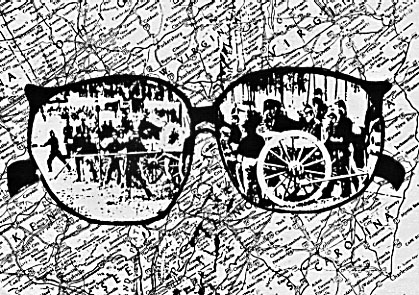
With every mention of “Stonewall” his mind went back to the hilly fields of northern Virginia, where friends and family members would gather for one Civil War re-enactment or another; it was their life, and they lived to dress up like rebel soldiers, get out in the fall woods, fire muskets and eat old-time kinds of food like biscuits and stew. They too knew the details; they knew who killed whom, who marched where, which battles the rebels had won, and how many children the original “Stonewall” had fathered. It seemed, back in Virginia, as if almost everyone lived and relived the Civil War almost every minute, although that was partly because of Paul’s own family’s interest, and the way they surrounded themselves with similar-minded people. When he moved to New York, for example, he was shocked that there was a Civil War statue outside his workplace, yet not a single person there had any clue what it represented, who it was, what his significance was, what side he’d been on, etc. This could never have happened in his community in Virginia; the Civil War statues he knew were adored, reviled, spit upon, or cherished, but never ignored.
In her recall of minute details of historical events, Jeannette was really somewhat similar to some friends of Paul’s in Virginia, and he began to appreciate that in her; it made him more comfortable with her. The difference, of course, was that now they were talking about the events of 1969, instead of those of 1863. They were eating, finally, in a small French restaurant somewhere in lower Manhattan. Strands of her hair had come loose from the long walk and he watched. When he asked her why she knew all these things, she explained that she’d grown up in a gay family who tended to relive the details of the Stonewall riots at virtually every meal. She asked him, finally, about his life, and he explained a little about the re-enactments.
One of the most popular was the re-enactment of the Battle of Chancellorsville; they liked that one because the Rebels had won by outsmarting the Union, and they had done that by dividing their troops into two separate groups. There were always enough re-enactors to get two groups of Rebel soldiers, he said, and they took turns playing the Union soldiers, just to keep it going, though there were a few who didn’t mind being Union soldiers and some who wanted to. He himself had played Stonewall Jackson at the last re-enactment he had gone to, maybe three years ago, before moving to Manhattan.
The French waiter looked at them impassively, very observant yet apparently understanding very little English. There were times, Paul thought, that virtually everything reminded him of the Civil War era, no matter what he did. Within seconds, though, he’d decided to omit the story of Rebecca. Rebecca was a cook at a re-enactment, quite beautiful, and more so since every time he saw her she was in 1860’s dress and surrounded by the smell of home-made food; and he’d quite innocently fallen in love with her, over the course of several re-enactments. But he found out quite suddenly, on that last re-encampment, that she was married; not only that, but her husband vowed to kill Paul if he ever should appear at another re-enactment. He was moving to New York that March, so it never was an issue, but it had left a sour taste on the whole re-enactment memory, at least as he was in the process of recalling it.
He skipped forward to the story of Stonewall Jackson himself. Stonewall, he told her, was a famous general of the Confederacy, much loved and admired throughout the South. But at that very battle, the Battle of Chancellorsville, he’d been shot three times in the arm by his own men, by accident; they had to amputate the arm, and he died eight days later. Paul knew most of the details of Stonewall Jackson’s life, as did most of his friends; Jeannette, however found it somewhat odd. At one point, when she questioned him, he recalled an aunt in the family who was visiting their house after one of the re-enactments. She had asked if it wouldn’t be better if people just forgot the Civil War and moved on to other things. He laughed a little; knowing his family, that would have been impossible, if not completely ridiculous.
Back on the street, he walked Jeannette to the subway, where she would catch her train home; it was still early. Steam rose from the grates beneath their feet and dissipated in front of them as they walked. Retelling the story of the re-enactments reminded him to some degree how much he missed the area he was from, as well as how much he was glad to be rid of it. Nevertheless he wasn’t completely comfortable with New York and all it entailed. In the subway station they parted, and Jeannette kissed him suddenly, upon leaving. He felt shy, like a visitor, still unaware of the culture even after all these years. People hurried past him in all directions, as he stood there, for a moment, dazed.
But then, as he began to walk toward his own subway stop, he spotted a woman who looked exactly like Rebecca. He was shocked, yet he was almost certain it was her. She was walking in the other direction; she gave him a surprised look and then looked away, not to look at him again. She was mostly covered by a sweater, but still, he was sure enough it was her, and surprised enough, to stop dead in his tracks, and stare at her as she disappeared into the crowd. Like a ghost, he thought; you can never be sure whether they are real or not, but they look so familiar, so real, that they might as well be. But New York was different from Virginia this way: he was pretty sure he’d never see her again.

Subscribe to:
Post Comments (Atom)




No comments:
Post a Comment