Eric and his wife Vanessa got on the elevated subway in Queens, headed to midtown Manhattan to meet Vanessa's uncle, who was in town for a reunion of army veterans. He had come from Kentucky, had spent a good bit of money to plant himself in midtown for a few days, and it was her duty as a niece to go recognize him and have a drink, so Eric went along. It was rare that they took the subway these days; they both had cars, and had even drifted apart in the last few years because of it. They had other reasons, though, that they had drifted apart. Recently they'd had a fight over whether he could spend family money buying a building in Second Life, an online computer game. He wanted the building to make a bar where his friends could come and talk. She absolutely couldn't understand paying real money for that, and put her foot down. They were at an impasse.
The subway, as usual, was full of many diverse and interesting people, some Greek, some Hindi, some Mexican, some Eric couldn't even guess. A young mother had trouble controlling her young children. A couple of teenage boys in muscle shirts made plans for the evening; it was about seven, and it was in May. The night was young. Lots could still happen.
A mariachi band came into the subway car, and each member set up quickly and they started a tune. Eric tried to figure out how they picked which car to step into. He saw in the leader's face, a kind of tiredness, as if they'd played this tune a million times. It was a sad, Mexican song with a sweet accordion that played against the natural rumbling of the car. Some of the passengers looked out the window, or averted their eyes. Eric rummaged for a dollar, found it, and gave it; this was more or less what was expected.
Toward the end of the song a ten-year-old kid came up to the band and complained bitterly that he'd heard that same song just last week in this very car. Didn't they have any other songs? The leader's face fell; he wanted everyone to be happy. Quickly they agreed to play another; they had plenty, and lots of them were good. But the train lurched into the station before the second song really got to its climax. The band had a choice to make, and the leader chose to close up shop and get out of the car. It had something to do with how easy it was for a band to get across the station and back into another car going the other way. Quickly, with no fanfare, they packed up and left. But they left that second song, a bit more lively, yet still with the sad accordion, hanging in the air.
He rode in silence with his wife for a while; he looked at wisps of her hair gone a little askew; she herself was looking out the window, lost in thought. It occurred to him that one night, on this very subway, she'd confessed to him that she'd had a mini-crush on a guy at work, just some bloke that had appeared one day. Nothing came of it, she'd assured him; he, Eric, was the only one for her. They'd been married what, fifteen years, they ought to be used to each other. But this had crushed him, inside, and he'd never quite forgiven her. He thought for a while about his experience in Second Life. Basically, online, you had this city where everyone was busy exercising and realizing their wildest fantasies. If they wanted to kill people all day, they did. If they wanted to have wild virtual sex, they did. Whatever they wanted, they did. One of the things they did was be rude, routinely, to each other. He was quite used to it, and comfortable in this world. You could build your house with a glass roof, or with no windows or doors, whatever you wanted. He knew what he was doing, and he knew what he wanted; he just wanted to buy this one piece of virtual real estate on a particular corner.
The problem was, it didn't quite translate to her. There was a gulf there; she couldn't understand the attraction. When he took her there, online of course, it only got worse. Everyone had an avatar, and these avatars had purple hair, and beautiful bodies, and spoke rudely, of course. In one bar it appeared that nobody was even talking, but that's because all the interaction was online. You just couldn't hear it. She'd become frightened and insisted they leave.
Back on the subway, the car hurtled underground as they got into Manhattan; they were almost midtown. They talked about little things for a while; she'd promised him they'd be home by eleven. They could have taken their cars, but were naturally frugal people, and there was no good reason to take a car into Manhattan, with all the expense that entailed, on a trip like this. On some things, they still had a good natural agreement.
Down in midtown they got out of the subway and went up into the classy hotel where they'd agreed to meet the uncle. It always seemed to Eric, walking in midtown, that he saw famous people, people like Woody Allen, heads down, walking, coming to or from the MoMA, or wherever. The problem was, he'd been somewhat preoccupied with Second Life, not to mention his job, and he was a little less in touch with who was famous these days. Some of these people could be famous, for all he knew; they walked with their heads down, and he'd try to figure out what they looked like, as they passed each other briefly on the street.
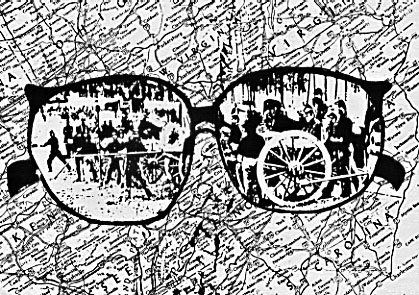
Up in the hotel, they found the uncle and ordered drinks, and sat down at a lounge somewhere in the middle of the hotel, maybe on the second floor. The uncle was older, maybe about seventy-five, well-dressed, and knew the occasional person as they walked through that second-floor lounge. He not only knew them, he'd been in their division, their company, in Germany one bleak winter when the division was being routed and lots of people were dying. That was the essence of the reunion, the uncle explained. Unfortunately, the only people who could be here tonight were the ones who lived through it, and among them, lots of them hadn't made it this far, either; they'd lived through the war, maybe, but hadn't made it the next fifty or sixty years. Eric, who needed to hear this for some reason, got the uncle to talk about guys he'd known who had died right in front of him, or had died in one of the hideous encounters the division had with the enemy. These people, as it turned out, were still very important to the uncle; he lived with these memories every day, more so now that he was retired. It was hard, he said, to come all the way from Kentucky to Manhattan, at his age, and be here tonight. But he wouldn't have missed it for the world. It was just freak chance, he said, that some of the guys in his company were alive, and others dead. The least he could do for the ones he'd known, he said, was to come up here from Kentucky, to hang around with the ones who were still alive. His wife, back in Kentucky, had to fend for herself for a few days; she didn't understand, maybe, how important it was to him.
They talked New York for a while; Vanessa told him how to go to MoMA, in the morning, if he wanted to, and where he could get a good breakfast. She knew the city with confidence. Eric remembered how it was that he'd fallen in love with her.
Going back to Queens that night on the subway, Eric resolved to give up Second Life, and that entire fantasy world. He'd go visit, yes, but he'd live without buying that corner building. He was tired now; the drink was clouding his brain. Vanessa let him rest his head on her shoulder as they warily watched the car fill up, again, with strangers. No mariachi band this time. This time they sat so that, between the buildings that they looked out at, some lit up at night, they would occasionally see the river and be able to look across at Manhattan, which glowed a little at night. Other riders, coming home from work, maybe, would be totally unimpressed. Eric, still remembering stories of bloody death in Germany in mid-winter, felt he was the luckiest guy in the world. When the subway stopped he went first through the turnstile gate, and waited for Vanessa, then walked down the stairs together into the late night street which was, as common for any street in New York, never entirely asleep. The one thing people had in common, in this city, he thought, was that they were all comforted, to some degree, by that constant activity. As he scanned the street, he was aware that 11:00 at night wasn't the best of times to be there; he could certainly sense that feeling in his wife as they walked the remaining blocks. But it was better than Second Life, where any time was no time, and people came from every time zone, and so didn't care, or maybe they'd been on there for five, ten or twelve hours straight anyway. As they got to their flat, on one of the side streets, he felt like he was returning home after a long absence; he'd forgotten to notice some of the details; fortunately, Vanessa had been keeping track. The apartment was clean and quiet, and flowers hung in the windows. He was comforted that it hadn't changed much, in his absence.
writing of thomas leverett

Welcome!

This is a site where I put samples of my writing. You are welcome to peruse it and read as many of my old stories as you want. I would be even happier if you got the kindle versions, the paperbacks, or the ACX versions!
facebook site
Amazon site
short stories

for grazers
e pluribus haiku

just passing through
some o' mine
stories to try
Lighthouse Tour

see what's out there

No comments:
Post a Comment