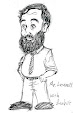
One problem is that while I dawdle along, doing my writing thing, the world is quickly progressing, I'm getting older, and people I love are getting impatient with me. Why? Not because I don't produce, or don't make money, or am not happy - I am happy, though the other two are questionable - it's more because they kind of expect me to be outside, be strong, be thin, be physical, and the more I write, the more I want to sit here, tucked back in my chair, ignoring everything else.
Today I was taking the car in for an oil change and they had modern stuff - this was the dealer. A cappucino machine, trail mix, it was classy. This was good because it took over an hour because they wanted to inspect it, whatever. But what was alarming was the television, something I never watch, which showed an endless parade of people-tripping-and-badly-hurting-themselves clips. Just what I needed! At 72 I already live in fear of such things.
The upshot of it is, I have to write my once-in-a-lifetime book. The one I'm here on this earth to write. It's about language. It's about Chomsky, and Universalism, and the way people are.
To get the essence of it, study traffic, and the way it's similar to language. In both cases people interact with each other, each with their own motive. In both cases their mutual success is good for each of them. In both cases the law tells them what to do but they do what they want anyway, although sometimes they're afraid of the law, or sometimes at least, the law influences their behavior. The law doesn't control their behavior. Natural barriers in some cases make breaking the law harder but in general, people can do what they want to do, law or not.
Come with me, on Lake Shore Drive, Chicago. The sky is blue on one side and the lake shines. On the other, tall buildings, stacked up against each other. But be careful! You are in one of seven lanes of traffic and all are going 70. One false move and you have a twenty-car pileup. Why is everyone breaking the law? Because it's mutually beneficial. If you just go the same speed as everyone, everyone gets there faster. Just don't blow it!
What does this have to do with language? Chomsky used to make a big deal out of natural restrictions, like they were built in to our concept of language. But does nature make restrictions? No, not really, unless it helps people evolve. So, nobody tells you you have to drive on the right, only the law tells you, and you still do it either because you are cooperating with the law, or because that's what everyone expects you to do. Why go against the grain? Only if there is a purpose.
When your wife starts having a baby in the passenger seat, now you care less about societal norms and conventions.. If you can drive right across the grass to get to the entrance to the hospital, you'll consider it, because why not? This is no time to worry about politeness. If you have to go the wrong way on a one-way street you'll do that too but quick because that's not what people expect. Your behavior is determined by your needs, the pressure, what people expect, and what the law says. And also getting there as fast as possible, if that's part of the picture.
Now you're in a conversation with someone. Are there laws? No mostly conventions. There might be a few laws, like don't threaten the president, but in general you do things because that's what people expect and that's what helps them understand you. You seek the norm because they understand the norm. If they don't understand you, everyone loses.
I could go on, but I won't. Time's a-wastin'. I need to write this book. Watch out for it. The world goes on, traffic goes on, but in the world of language theory we just try to get to the bottom of eternal questions. Is there anything that all languages have in common? What do you have to do to make someone understand you?
Wednesday, August 5, 2026

Wednesday, July 15, 2026
read marketing
In a funk, I've done a lot more read marketing. It's a painfully slow way to get readers as essentially they read in return for your reading and they'll only read as fast as you read, roughly a hundred some pages a day. it's obviously better than nothing but getting used to nothing is not an option and besides, it's ninety-two days this week and i'm trying hard to resist going anywhere or doing anything outside.
So now I have six books open, count 'em, six, and when one gets to be too much, I switch. I define too much loosely. Sometimes I'm just not in the mood for a certain style. But if there are six, there's usually one that will 'take,' meaning I actually read, and actually enjoy and get pleasure from. One of the advantages of read marketing is that you read lots of things you otehrwise wouldn't, and, you learn a lot of different things, in essence traveling from place to place in your free time.
One of them is a modernist rant about life in England. I actually like this author though i often don't get where he's going with something or what kind of plot line we have. No plot line. Or rather, like life, hundreds of plot lines and don't expect him to explain or make sense of them. But the other book is about a woman cracking up. A reasonably intelligent woman losing track of what's real - this cuts a little too close to home. I was married to a woman like that. And these two books are on sites that I value - they move along, they provide readers, things happen.
A recent trend is that I've become popular with Indian writers. The feeling is mutual - I like their work too - which means we are all reading each other's work a lot. A problem is that while you get about a half a penny a page for American readers, you get less than a tenth of a penny for Indian ones, which means they can read a whole two-hundred page novel of yours and you only get maybe seventeen cents. This I think would turn the users of these pages against them, but I try to take a wider view, not being entirely economically dependent on these measly pennies.
Here are some reasons why it could be like this; I admit I'm not sure and haven't done my research. Your pay is simply a distribution of the funds that amazon.co.in takes in to the total number of pages read in kindle unlimited. What seems to be happening is that amazon.co.in is taking in a lot less money on kindle unlimited than the other amazons. This could be because they're charging a lot less for it; here it's about twelve bucks a moonth and they're getting plenty of business. But it also could be that culturally they share their kindle unlimiteds more than we do. So for example a mother gets ku and of the ten books she's downloaded, one is for her husband, some are for her kids, some are for neighbors, and everyone is actively reading and actively keeping track, on various devices, so that hundreds of pages are being read on that one account every day. This could be happening here, but obviously isn't, as much. At times even my wife and I had different ku's, she didn't want to cross with my system. I've offered my son my ku too as he's an avid reader, but he also prefers to use his own system. It could therefore be because of a different cultural setup.
It's interesting to me the general fluency of the English-writing community in India and how this general fluency exists along with various cultural differences. It's wild to me that I'm popular with these writers as they seem to be curious about the world and possibly favor my traditionalist grammar as being more similar to what they grew up reading.
It's an interesting world and slowly, I'm learning my way.
So now I have six books open, count 'em, six, and when one gets to be too much, I switch. I define too much loosely. Sometimes I'm just not in the mood for a certain style. But if there are six, there's usually one that will 'take,' meaning I actually read, and actually enjoy and get pleasure from. One of the advantages of read marketing is that you read lots of things you otehrwise wouldn't, and, you learn a lot of different things, in essence traveling from place to place in your free time.
One of them is a modernist rant about life in England. I actually like this author though i often don't get where he's going with something or what kind of plot line we have. No plot line. Or rather, like life, hundreds of plot lines and don't expect him to explain or make sense of them. But the other book is about a woman cracking up. A reasonably intelligent woman losing track of what's real - this cuts a little too close to home. I was married to a woman like that. And these two books are on sites that I value - they move along, they provide readers, things happen.
A recent trend is that I've become popular with Indian writers. The feeling is mutual - I like their work too - which means we are all reading each other's work a lot. A problem is that while you get about a half a penny a page for American readers, you get less than a tenth of a penny for Indian ones, which means they can read a whole two-hundred page novel of yours and you only get maybe seventeen cents. This I think would turn the users of these pages against them, but I try to take a wider view, not being entirely economically dependent on these measly pennies.
Here are some reasons why it could be like this; I admit I'm not sure and haven't done my research. Your pay is simply a distribution of the funds that amazon.co.in takes in to the total number of pages read in kindle unlimited. What seems to be happening is that amazon.co.in is taking in a lot less money on kindle unlimited than the other amazons. This could be because they're charging a lot less for it; here it's about twelve bucks a moonth and they're getting plenty of business. But it also could be that culturally they share their kindle unlimiteds more than we do. So for example a mother gets ku and of the ten books she's downloaded, one is for her husband, some are for her kids, some are for neighbors, and everyone is actively reading and actively keeping track, on various devices, so that hundreds of pages are being read on that one account every day. This could be happening here, but obviously isn't, as much. At times even my wife and I had different ku's, she didn't want to cross with my system. I've offered my son my ku too as he's an avid reader, but he also prefers to use his own system. It could therefore be because of a different cultural setup.
It's interesting to me the general fluency of the English-writing community in India and how this general fluency exists along with various cultural differences. It's wild to me that I'm popular with these writers as they seem to be curious about the world and possibly favor my traditionalist grammar as being more similar to what they grew up reading.
It's an interesting world and slowly, I'm learning my way.
Monday, June 15, 2026
Ratings
Some very unusual things happened to the book ratings last week, so unusual that I thought I'd write about them to see if I could sort them out myself. There are reasonable explanations for things but one never knows, so putting it all down helps me think about the possible reasons.
One of the weirdest was that all my international book ratings went up, way up. I only sell a few books internationally - one here in Germany, one here in Canada, a couple in the UK, that kind of thing, so they carry their ratings for about a year and then they disappear unless people come along and buy another one. After a few months they're sitting there with a rating of like 2.7 million, but this week that one went down by 250,000 (lower number is actually a higher rating) so what I'm saying is that it appears that 250,000 books just disappeared from the system. You can get rid of 250,000 books either by a mass culling (declaring that after a year, say, they no longer get a rating), or by a mass reorganization (saying that such-and-such book is no longer in this category - has a new category? or whatever. What's unusual to me is that it happened in paperbacks throughout the system - Germany, Canada, UK, Japan,
In the US (.com) paperback ratings also went down (got better) dramatically. Lots of them got a million points better, give or take a few hundred thousand. What's up? Mass culling? Mass reorganization? There are probably other explanations. Like, from now on, we won't count books that you printed but we're not sure if you sold them. Or, from now on, we won't count books that you bought yourself from home or all from the same address. Or, from now on, we'll count books the libraries bought. Or something like that - who knows what they count or what they don't? I can't imagine so many books though, getting a million points better. I used to have three books with paperback ratings of over ten million; now I hae only one.
Finally, kindle category ratings took a dive. A book that had a rating of 9,389 (US Short stories) last week was at 12,809 this week. What, 350,000 books of short stories were published to push them down? This by the way happened with many books of short stories, lost 300-350K in the USSS category, but oddly enough their base kindle rating, which I believe the category rating is based partly on, behaved like usual. Only got 20,000 points worse or so. Now, how do you explain? Sounds like a reorganization to me, like you have the same books in the same six million or so slots above it, only 20,000 new ones to push it down, but more of them are being called "USSS" these days, whereas they used to have a different category.
Can't really explain. Only that I watch, keep track, feel an odd sense of pleasure that any of my books has any slot in the entire system at all. When I have books in the top 100 of anything, or even in some cases below a million in general rating, I'm proud for a week or as long as it can stay there and resist the general relentless ratings push to the astronomical numbers. They fall off a cliff every once in a while - if you keep track you see it - but then when somebody buys one you shoot up and shed five or six million points in a single moment - always worth watching.
Does anyone care? I mean if someone opens up your book and looks it over, do they scroll down and see what its rating is, and then buy or not possibly being influenced by that number? Open question. The numbers do occasionally impress other writers. Or not, as the case may be.
One of the weirdest was that all my international book ratings went up, way up. I only sell a few books internationally - one here in Germany, one here in Canada, a couple in the UK, that kind of thing, so they carry their ratings for about a year and then they disappear unless people come along and buy another one. After a few months they're sitting there with a rating of like 2.7 million, but this week that one went down by 250,000 (lower number is actually a higher rating) so what I'm saying is that it appears that 250,000 books just disappeared from the system. You can get rid of 250,000 books either by a mass culling (declaring that after a year, say, they no longer get a rating), or by a mass reorganization (saying that such-and-such book is no longer in this category - has a new category? or whatever. What's unusual to me is that it happened in paperbacks throughout the system - Germany, Canada, UK, Japan,
In the US (.com) paperback ratings also went down (got better) dramatically. Lots of them got a million points better, give or take a few hundred thousand. What's up? Mass culling? Mass reorganization? There are probably other explanations. Like, from now on, we won't count books that you printed but we're not sure if you sold them. Or, from now on, we won't count books that you bought yourself from home or all from the same address. Or, from now on, we'll count books the libraries bought. Or something like that - who knows what they count or what they don't? I can't imagine so many books though, getting a million points better. I used to have three books with paperback ratings of over ten million; now I hae only one.
Finally, kindle category ratings took a dive. A book that had a rating of 9,389 (US Short stories) last week was at 12,809 this week. What, 350,000 books of short stories were published to push them down? This by the way happened with many books of short stories, lost 300-350K in the USSS category, but oddly enough their base kindle rating, which I believe the category rating is based partly on, behaved like usual. Only got 20,000 points worse or so. Now, how do you explain? Sounds like a reorganization to me, like you have the same books in the same six million or so slots above it, only 20,000 new ones to push it down, but more of them are being called "USSS" these days, whereas they used to have a different category.
Can't really explain. Only that I watch, keep track, feel an odd sense of pleasure that any of my books has any slot in the entire system at all. When I have books in the top 100 of anything, or even in some cases below a million in general rating, I'm proud for a week or as long as it can stay there and resist the general relentless ratings push to the astronomical numbers. They fall off a cliff every once in a while - if you keep track you see it - but then when somebody buys one you shoot up and shed five or six million points in a single moment - always worth watching.
Does anyone care? I mean if someone opens up your book and looks it over, do they scroll down and see what its rating is, and then buy or not possibly being influenced by that number? Open question. The numbers do occasionally impress other writers. Or not, as the case may be.
Monday, May 25, 2026
As a former ESL teacher, I know my grammar pretty well, and have done enough proofreading that I don't want to pay someone else to do it. I also want to be 100% indie, so I've decided that as hard as it is to proofread my own book, I'll do it several times if I have to, and that's what I'm doing.
I've been horrified to find typos in my most recent book, which I thought I had proofread pretty thoroughly. It leads me to wonder if perhaps I coomined the wrong files when I put it together.
But my attitude has changed considerably on typos. As a matter of pride, I used to hate it whan anything of mine that was published had even a typo in it. I'd change it and republish as soon as I possibly could. But AI has changed the way I look at it.
If AI would never allow a typo, then a typo is the mark that a human wrote it. But if you think about it, even typos that are corrected in later editions are marks that a human wrote it. That's my proof. If you think AI did my book because it has good grammar and no typos, you're wrong and I can prove it.
Also, I'm well aware that the vast majority of people just fly over them as they are reading. You tend to correct things and make sense of them naturally. Now bad grammar, especially repeated bad grammar (clearly not a typo) still irritates me. But that's not what we're talking about here.
In this age of AI, I fly my typos proudly. I will correct most if not all of them, just out of pride. But if there are a few in there, I'm not going to worry about it anymore.
I've been horrified to find typos in my most recent book, which I thought I had proofread pretty thoroughly. It leads me to wonder if perhaps I coomined the wrong files when I put it together.
But my attitude has changed considerably on typos. As a matter of pride, I used to hate it whan anything of mine that was published had even a typo in it. I'd change it and republish as soon as I possibly could. But AI has changed the way I look at it.
If AI would never allow a typo, then a typo is the mark that a human wrote it. But if you think about it, even typos that are corrected in later editions are marks that a human wrote it. That's my proof. If you think AI did my book because it has good grammar and no typos, you're wrong and I can prove it.
Also, I'm well aware that the vast majority of people just fly over them as they are reading. You tend to correct things and make sense of them naturally. Now bad grammar, especially repeated bad grammar (clearly not a typo) still irritates me. But that's not what we're talking about here.
In this age of AI, I fly my typos proudly. I will correct most if not all of them, just out of pride. But if there are a few in there, I'm not going to worry about it anymore.
Tuesday, May 19, 2026
Beasts of Ayutthaya

Three retellings of Beauty and the Beast
On Amazon:
$10.59 in Paperback
$2.99 on Kindle
free on kindle unlimited
A beautiful young woman falls in love with a beast - what could possibly go wrong? These three tales explore that question, in the light of Disney's classic animation and the original 1740 tale, along with a few other variations. It seems it's more common than you think. Beasts can be charming, handsome in their own way, intelligent, loyal, fiercely protective....yet they can kill without hesitation or guilt. They may of course turn into a prince - but is that so great? Visit 18th century Siam (Thailand) for these variations. Be Our Guest, White Elephant, and The Halberd give you some idea of the importance of elephants and tigers in ancient Thai culture, and tell tales that are worth comparing to the tales we know.
Monday, May 18, 2026
So I published a book the other night and I'm still traumatized by the experience. Writing about it will help me process it. Actually it seemed to come out ok and I will show you now, first time in public, before I start publicizing it seriously.
Beasts of Ayutthaya: Three retellings of Beauty and the Beast
It's real; it's good; it's 300 pages depending on how you count. Some of this is confusing to me. Again, maybe writing about it will help.
The book is basically a combination of three books that have already been published: Be Our Guest, White Elephant, and The Halberd. Each of the three stands alone ok but together they work better. I was basically taking this large file and trying to put it in a 5.8 X 8.5 format which seemed to be more common in the Global Beasts series.
You may be questioning my assumptions already, and I am too. How many are 5.8 X. 8.5 (as opposed to 6 X 9, which I'm more used to)? Do others face these struggles? I downloaded a 5.8 X 8.5 template and put my book into it. I prepared two covers (kindle and paperback) and uploaded the kindle version fairly easily, no problem. Doing the paperback it rejected my document, words outside their little margin. I could see that the header that appears on the top of every page was indeed over their margin, and the page number was right on that margin. So I eliminated the header, but could not seem to eliminate the page numbers.
I tried shrinking the margins of the original document. Finally I figured out how to move the page numbers up toward the document so they'd be inside that margin. I had a simple t of c which listed only the three parts. At first I had just taken page no's out of there so that t of c was useless. Changing margins I was making my little production very thick. Finally it worked and this morning I restored the t of c and made it as good as I could. Now I'm totally tired and I'm losing one key on my little computer here so I'll sign off. - perhaps to restart on a computer that is clunkier, however at least has its keys. aaach!!
Beasts of Ayutthaya: Three retellings of Beauty and the Beast
It's real; it's good; it's 300 pages depending on how you count. Some of this is confusing to me. Again, maybe writing about it will help.
The book is basically a combination of three books that have already been published: Be Our Guest, White Elephant, and The Halberd. Each of the three stands alone ok but together they work better. I was basically taking this large file and trying to put it in a 5.8 X 8.5 format which seemed to be more common in the Global Beasts series.
You may be questioning my assumptions already, and I am too. How many are 5.8 X. 8.5 (as opposed to 6 X 9, which I'm more used to)? Do others face these struggles? I downloaded a 5.8 X 8.5 template and put my book into it. I prepared two covers (kindle and paperback) and uploaded the kindle version fairly easily, no problem. Doing the paperback it rejected my document, words outside their little margin. I could see that the header that appears on the top of every page was indeed over their margin, and the page number was right on that margin. So I eliminated the header, but could not seem to eliminate the page numbers.
I tried shrinking the margins of the original document. Finally I figured out how to move the page numbers up toward the document so they'd be inside that margin. I had a simple t of c which listed only the three parts. At first I had just taken page no's out of there so that t of c was useless. Changing margins I was making my little production very thick. Finally it worked and this morning I restored the t of c and made it as good as I could. Now I'm totally tired and I'm losing one key on my little computer here so I'll sign off. - perhaps to restart on a computer that is clunkier, however at least has its keys. aaach!!
Wednesday, May 6, 2026
Tall Corn State
Tall Corn State
A personal novel with actualist poets, jumping trains, and unrequited love
KINDLE SPECIAL - 99c through the month of May
https://www.amazon.com/dp/B08XQ9612R
A personal novel with actualist poets, jumping trains, and unrequited love
KINDLE SPECIAL - 99c through the month of May
https://www.amazon.com/dp/B08XQ9612R

Friday, April 3, 2026
The Halberd

On Kindle $2.99
In paperback $6.99 + shipping
The Halberd is the third in a series of retellings of Beauty and the Beast; along with Be Our Guest and White Elephant, it is part of Beasts of Ayutthaya: Three retellings of Beauty and the Beast. Phang is in love with an elephant, Naresuan, in 18th century Thailand. She is a mahout, an elephant trainer, while he is a white or albino elephant, the most royal of the royal. It is a turbulent time in Thailand, with King Taksin the Great reuniting the Siamese yet losing his mental stability. Enemies conspire to keep them apart. In modern Ayutthaya, a young boy finds a halberd, an ancient weapon used by people who fought on elephants. Relics of the ancient capital stir up everyone's imagination.

Wednesday, April 1, 2026
I was at the doctor's office today, April Fool's Day, and the nurse asked me what I was going to do today. Well, I said, I was trying to publish a book, but you can't publish a book on April Fool's Day. "ARE YOU SERIOUS?" she asked me. Nobody in that small town (Abingdon Illinois) even dreamed about publishing books, or if they did, she hadn't heard about it. She thought it was a joke.
It wasn't. I published The Halberd last night on kindle and will publish the paperback tomorrow. It's taken forever. It is the third of three retellings of Beauty and the Beast.
I wouldn't want an April 1 pub date on it. People will look at it and waver - Is this serious? Is it a huge prank? It'll be a distraction.
But April 2 will work just fine. It's taken forever; it can take one more day.
It wasn't. I published The Halberd last night on kindle and will publish the paperback tomorrow. It's taken forever. It is the third of three retellings of Beauty and the Beast.
I wouldn't want an April 1 pub date on it. People will look at it and waver - Is this serious? Is it a huge prank? It'll be a distraction.
But April 2 will work just fine. It's taken forever; it can take one more day.
Sunday, March 15, 2026
Neon Pig
Neon Pig
I was coming through Northern California and decided to stop in on an old friend Charley who I’d known maybe fifty years ago. He told me how to get to his cabin and I set out in my rental car for a day out in the woods.
It was a long way going around and back into the forest to the east of Big Sur, where we used to hang out together with a group of hippies in the woods out there. He had basically said he was never going back to the “civilized” world, San Jose, San Francisco, wherever, and he’d meant it. He lived in the forest on his own for a while, then got a small inheritance and bought this place, this small cabin, and had been here ever since.
It was tiny, but had a garden, and he had everything he needed. You’d only find it if you knew exactly where it was, and that’s how he liked it. He was living off the grid, lived off hunting, growing food and finding it, and getting what energy he needed from a little solar setup. He wanted for nothing, he said, and didn’t miss people at all. He was friendly with his neighbors, but most of them were miles away and he liked it that way. He offered to take me hunting and I agreed; he grabbed a bow and arrows and off we walked down a forest path.
We had to go a ways, he said, because he didn’t want anyone seeing, and because civilization was bad for the kind of meat he lived on. “Maybe we’ll find a neon pig,” he said. “Reminds me of our old days on Big Sur.”
I didn’t know what he was talking about, but I remembered well the days at Big Sur, watching the sunset as the waves crashed up against us. We shared stories of those days and the way we’d talk about our experiences. He wanted someone to talk about it with as much as I did, he said, because he had some bizarre experiences that reminded him of those days.
The forest was deep and impenetrable, but it seemed that the sounds of the forest got a little louder, perhaps because way back in there they didn’t know to be quiet when we walked by, or because there was just absolutely no other sounds. To me it seemed that if it was California, it had to have lots of people around somewhere, but to him, he said this was as isolated as it got, but it wasn’t quite good enough and he wasn’t able to hunt the way he used to.
He got the chance to show me what he meant when a wild pig attacked us on the trail. It was the size of a very large dog but fierce and clearly not something to tangle with. I was unarmed, but he was prepared, and killed it with one shot of the arrow. I was shocked but admired his dexterity and skill; I said that I hadn’t learned anything as useful in fifty years out in the civilized world.
“Useful?” he said. “The problem is, these feral pigs have a wide range, and it’s very likely they’ve been in civilization.” With one strong gouge with a hunter’s knife, he cut the pig open. Lo and behold, it was a neon blue color, deep blue like a blueberry.
“A neon pig? How did that happen?” I asked. It seemed like a twisted variation of our psychedelic days, come back to haunt us. But it was real: neon blue, all through his insides.
“Rat poison, most likely,” he said. “They eat it, and then, if we eat them, it poisons us too. I was lucky I heard about it before I tried one.”
It shot the good part of an afternoon, but eventually he’d gouged out a pit where he could bury it reliably enough so that other animals couldn’t get to it. I mostly watched, having very little in the way of digging implements or skill at finding soft earth. Eventually we buried it and headed home. He had plenty for dinner, he said, and he didn’t need any neon pig to ruin my experience.
We ate a dinner of squirrel, venison, and homegrown vegetables; I was surprised a guy on his own could eat so well. “Usually I don’t,” he said, “but it’s good to see someone from those old days.” The neon pig experience kind of stuck in my craw, but he told me to forget it. “It’s a product of how far they range, and whether they get into civilization. I go way back there so that animals back there don’t range that far. But that pig does, and he’s a hungry fellow. He’ll eat just about anything you put in front of him, and that includes rat poison.”
The years of hunting had given him an anti-civilization bias, I told him. Good thing, he said, or we wouldn’t be sitting here talking about it.
I was coming through Northern California and decided to stop in on an old friend Charley who I’d known maybe fifty years ago. He told me how to get to his cabin and I set out in my rental car for a day out in the woods.
It was a long way going around and back into the forest to the east of Big Sur, where we used to hang out together with a group of hippies in the woods out there. He had basically said he was never going back to the “civilized” world, San Jose, San Francisco, wherever, and he’d meant it. He lived in the forest on his own for a while, then got a small inheritance and bought this place, this small cabin, and had been here ever since.
It was tiny, but had a garden, and he had everything he needed. You’d only find it if you knew exactly where it was, and that’s how he liked it. He was living off the grid, lived off hunting, growing food and finding it, and getting what energy he needed from a little solar setup. He wanted for nothing, he said, and didn’t miss people at all. He was friendly with his neighbors, but most of them were miles away and he liked it that way. He offered to take me hunting and I agreed; he grabbed a bow and arrows and off we walked down a forest path.
We had to go a ways, he said, because he didn’t want anyone seeing, and because civilization was bad for the kind of meat he lived on. “Maybe we’ll find a neon pig,” he said. “Reminds me of our old days on Big Sur.”
I didn’t know what he was talking about, but I remembered well the days at Big Sur, watching the sunset as the waves crashed up against us. We shared stories of those days and the way we’d talk about our experiences. He wanted someone to talk about it with as much as I did, he said, because he had some bizarre experiences that reminded him of those days.
The forest was deep and impenetrable, but it seemed that the sounds of the forest got a little louder, perhaps because way back in there they didn’t know to be quiet when we walked by, or because there was just absolutely no other sounds. To me it seemed that if it was California, it had to have lots of people around somewhere, but to him, he said this was as isolated as it got, but it wasn’t quite good enough and he wasn’t able to hunt the way he used to.
He got the chance to show me what he meant when a wild pig attacked us on the trail. It was the size of a very large dog but fierce and clearly not something to tangle with. I was unarmed, but he was prepared, and killed it with one shot of the arrow. I was shocked but admired his dexterity and skill; I said that I hadn’t learned anything as useful in fifty years out in the civilized world.
“Useful?” he said. “The problem is, these feral pigs have a wide range, and it’s very likely they’ve been in civilization.” With one strong gouge with a hunter’s knife, he cut the pig open. Lo and behold, it was a neon blue color, deep blue like a blueberry.
“A neon pig? How did that happen?” I asked. It seemed like a twisted variation of our psychedelic days, come back to haunt us. But it was real: neon blue, all through his insides.
“Rat poison, most likely,” he said. “They eat it, and then, if we eat them, it poisons us too. I was lucky I heard about it before I tried one.”
It shot the good part of an afternoon, but eventually he’d gouged out a pit where he could bury it reliably enough so that other animals couldn’t get to it. I mostly watched, having very little in the way of digging implements or skill at finding soft earth. Eventually we buried it and headed home. He had plenty for dinner, he said, and he didn’t need any neon pig to ruin my experience.
We ate a dinner of squirrel, venison, and homegrown vegetables; I was surprised a guy on his own could eat so well. “Usually I don’t,” he said, “but it’s good to see someone from those old days.” The neon pig experience kind of stuck in my craw, but he told me to forget it. “It’s a product of how far they range, and whether they get into civilization. I go way back there so that animals back there don’t range that far. But that pig does, and he’s a hungry fellow. He’ll eat just about anything you put in front of him, and that includes rat poison.”
The years of hunting had given him an anti-civilization bias, I told him. Good thing, he said, or we wouldn’t be sitting here talking about it.
Wednesday, February 18, 2026
A comedy of errors ensued when my main little computer went on the fritz. It was pretty clearly a bettery problem and that's what they said at the computer store, though they have still not restored it. Though I didn't back it up, I have most of my stuff on the web somewhere else anyway so could have just lived without it as my wife suggested - she said it's better to get a newer one cheap than to fix the battery of an older one that will be obsolete soon anyway.
Nevertheless under pressure I agreed to have them replace the battery, an expensive proposition. But meanwhile at home other things fell apart.
The one I use that has Word, I use for writing, but it keeps blinking off, much to my great aggravation. It's very old, and has been doing this for some time, and I figure, if all I use it for is Word, writing my book, I'll be ok. But now I can't resist opening up for the web stuff - what's happening on Amazon, book reviews, etc., all this stuff I have going. As I open it more, it blinks off more. It's still functioning but very delicate.
So I open up the family computer, Horse, and start to use it. It too has Word, and also has both Firefox and Chrome, like the blinker (old silver computer). Horse is slow-loading. Someone put a malfunctioning Origin on it and I have to force quit it every time. I also have to force-quit Word itself which opens automatically but seems to get caught on stuff as it opens and messes up the opening of everything else. All I want is Firefox or Chrome, and possibly to work on my book, which is in Word.
The Firefoxes of these computers are getting increasingly outdated and just can't handle what goes on in the modern world. That's partly because the computers have ancient operating systems and the Firefoxes can't be updated on old operating systems. The Chromes are a little better at that. But the Chromes don't have any of my information: passwords to get into Facebook, Goodreads, e-mail, etc. I have to import all those passwords and start out all over.
So I get to work and set up Chrome on Horse so that I can at least function minimally while they are waiting for the battery for my work computer. I have Chrome going on Horse and am importing all these passwords and bookmarks and setups, when it dies suddenly completely and thoroughly. Nothing. No blink, no nothing.
Now I'm totally depressed and start just using my phone, which, after all, has a few of the web things, and is as connected as I keep it. And it doesn't ever blink off for any reason which becomes my main qualification. I try charging Horse to no avail (its charging is apparently a little spotty) and leave it to charge overnight a few times, also to no avail. Though a few days later it actually starts, much to my surprise, which means that though its main battery may be very low at least a charging system works once in a while. Juice is coming through the plugs. Hallelujiah. That was the most recent copy of my book, on Horse. Now I've got it back.
A lot of things are lost when I live on Horse. Immediate access to lots of marketing photos, uploading ability to Instagram and Bluesky, which I still haven't recovered, sound for my listening exercises for my new cochlear implant. Turns out I was doing a lot of things on that little computer and I really miss it. Zoom is another one, did both my zooms on the phone. It was possible but different, awkward, inconvenient.
Back in the battle for now. A new Beauty and the Beast ought to be coming out, any time now. Then it's back to work on something more mundane.
Nevertheless under pressure I agreed to have them replace the battery, an expensive proposition. But meanwhile at home other things fell apart.
The one I use that has Word, I use for writing, but it keeps blinking off, much to my great aggravation. It's very old, and has been doing this for some time, and I figure, if all I use it for is Word, writing my book, I'll be ok. But now I can't resist opening up for the web stuff - what's happening on Amazon, book reviews, etc., all this stuff I have going. As I open it more, it blinks off more. It's still functioning but very delicate.
So I open up the family computer, Horse, and start to use it. It too has Word, and also has both Firefox and Chrome, like the blinker (old silver computer). Horse is slow-loading. Someone put a malfunctioning Origin on it and I have to force quit it every time. I also have to force-quit Word itself which opens automatically but seems to get caught on stuff as it opens and messes up the opening of everything else. All I want is Firefox or Chrome, and possibly to work on my book, which is in Word.
The Firefoxes of these computers are getting increasingly outdated and just can't handle what goes on in the modern world. That's partly because the computers have ancient operating systems and the Firefoxes can't be updated on old operating systems. The Chromes are a little better at that. But the Chromes don't have any of my information: passwords to get into Facebook, Goodreads, e-mail, etc. I have to import all those passwords and start out all over.
So I get to work and set up Chrome on Horse so that I can at least function minimally while they are waiting for the battery for my work computer. I have Chrome going on Horse and am importing all these passwords and bookmarks and setups, when it dies suddenly completely and thoroughly. Nothing. No blink, no nothing.
Now I'm totally depressed and start just using my phone, which, after all, has a few of the web things, and is as connected as I keep it. And it doesn't ever blink off for any reason which becomes my main qualification. I try charging Horse to no avail (its charging is apparently a little spotty) and leave it to charge overnight a few times, also to no avail. Though a few days later it actually starts, much to my surprise, which means that though its main battery may be very low at least a charging system works once in a while. Juice is coming through the plugs. Hallelujiah. That was the most recent copy of my book, on Horse. Now I've got it back.
A lot of things are lost when I live on Horse. Immediate access to lots of marketing photos, uploading ability to Instagram and Bluesky, which I still haven't recovered, sound for my listening exercises for my new cochlear implant. Turns out I was doing a lot of things on that little computer and I really miss it. Zoom is another one, did both my zooms on the phone. It was possible but different, awkward, inconvenient.
Back in the battle for now. A new Beauty and the Beast ought to be coming out, any time now. Then it's back to work on something more mundane.
Tuesday, February 3, 2026
clever scams
When you're a writer you get inundated by people asking you what inspired your writing. They send the same message to thousands of writers, so if it implies they've actually read your writing it's probably a wrong inference. In fact they are rarely specific about what actually they have read though when you ask them they will immediately find something. If you're quick you'll notice that it's total bullshit every time. They haven't read anything.
I have noticed several things besides the fact that talking to them at all is generally unproductive. It's unproductive because I'm 100% indie and they are totally focused on making me a trailer movie, or helping me find my perfect audience and exploit its infinite opportunities. We go back and forth sometimes but generally it's unproductive for both of us. If they want to hear about what inspired me, it's only because they want to use it to get a foot in the door.
Finally one of them found the perfect thing to say to me. It was that they were in contact with a film producer and wanted two works to present to them for making possible movies. Yes! I'd always imagined someone making movies of my book(s). So I answered. Big mistake. Now he wants to know if I have a professionally done film trailer.
Disappointment; he's just like the rest only slightly more clever with the foot in the door. Oh did I mention that the vast majority are from an oil-rich nation in Africa with good internet access but thousands of people with no way to make a living. And did I mention that they have found e-mail - not that my e-mail address was ever a secret, but more that using e-mail seems to them a better way of getting you to talk about what inspired you (this seems to be a hook, to flatter an author's ego), than other methods. It doesn't work for me. I don't really want to talk about inspiration on e-mail.
Apparently the vast majority of them are unsuccessful, too. They are in no better position to find my ideal audience than I am, and are a wide ocean away from it which is more important in terms of understanding it than actually reaching it, which is easy in this virtual age. So they make a trailer, you give them $20, or $50 or whatever, but then what do you do with it? I don't really need a YouTube presence, or TikTok for that matter though I realize that's where millions of young people are hanging out. But these days it's contrddictory: if they're hanging out at Youtube or Tiktok, they're not reading, and probably not looking for books to pick up either.
My default response is to ignore them: ignore the email, ignore the private FB message, ignore their question about my inspiration. Yes I was inspired, somewhere back there, for each book. It's none of their business how, not that they'd even care.
I have noticed several things besides the fact that talking to them at all is generally unproductive. It's unproductive because I'm 100% indie and they are totally focused on making me a trailer movie, or helping me find my perfect audience and exploit its infinite opportunities. We go back and forth sometimes but generally it's unproductive for both of us. If they want to hear about what inspired me, it's only because they want to use it to get a foot in the door.
Finally one of them found the perfect thing to say to me. It was that they were in contact with a film producer and wanted two works to present to them for making possible movies. Yes! I'd always imagined someone making movies of my book(s). So I answered. Big mistake. Now he wants to know if I have a professionally done film trailer.
Disappointment; he's just like the rest only slightly more clever with the foot in the door. Oh did I mention that the vast majority are from an oil-rich nation in Africa with good internet access but thousands of people with no way to make a living. And did I mention that they have found e-mail - not that my e-mail address was ever a secret, but more that using e-mail seems to them a better way of getting you to talk about what inspired you (this seems to be a hook, to flatter an author's ego), than other methods. It doesn't work for me. I don't really want to talk about inspiration on e-mail.
Apparently the vast majority of them are unsuccessful, too. They are in no better position to find my ideal audience than I am, and are a wide ocean away from it which is more important in terms of understanding it than actually reaching it, which is easy in this virtual age. So they make a trailer, you give them $20, or $50 or whatever, but then what do you do with it? I don't really need a YouTube presence, or TikTok for that matter though I realize that's where millions of young people are hanging out. But these days it's contrddictory: if they're hanging out at Youtube or Tiktok, they're not reading, and probably not looking for books to pick up either.
My default response is to ignore them: ignore the email, ignore the private FB message, ignore their question about my inspiration. Yes I was inspired, somewhere back there, for each book. It's none of their business how, not that they'd even care.
Wednesday, January 28, 2026
Ask for Promo Codes
Fellow writers and readers! I would love to have you listen to these. No review necessary though I am interested in what you think. They are narrated by a variety of people, some better than others of course. Best way is to email me and tell me which one(s) I can send. I will also exchange (I download and listen to yours). Thanks!


Tuesday, January 13, 2026
Luddite fringe activists
Writers are understandably upset about AI. AI can make a biography; all you have to do is ask it. AI is making children's books and literally flooding the market. AI is correcting everyone's grammar to the point that not using AI can be proven by a typo. This means that I encourage typos as a way of asserting you have written it yourself.
The problem is, "AI detection" programs are notoriously unreliable. What can you do if your work is 100% original but some program says it's 88% AI, or, 88% likely to be AI? Nothing. What I do is, try to avoid having my work run through the program in the first place. Lay low. Don't let anyone even ask the question.
One thing I will do is state unequivocally in the front cover of every book, This book was written by a real person...it is too late to do this with the thirty or so books I already have on the market. I could go back, sure, and slip it in there on the first page and then republish. But I don't want to do that, maybe because I'm too lazy, or because I feel like I shouldn't have to.
So the Luddite fringe activists are making lists of people who "use" AI for anything. Here's the thing. You can use it to write, use it to check your grammar, or use it to do the art on the cover. You can use it just to ask its advice on how you organized it. But it's a slippery slope. I can look up a word on google and it will give me a definition just because google stores definitions. But often it gives me an AI-driven explanation. Now some of my education and the preparation I have used for my book comes from AI, right? If I am to treat AI like a pariah, not touch it with even the side of my eye, then I have to pretty much get off the computer as I write and not look anything up at all. Or if I look it up, look it up only in the library. No AI! I don't want to admit that any use of the computer brain was involved in any part of my book.
With my art, full disclosure here, I've been using LunaPic, and I have no idea whether it qualifies as AI. It's been around since long before all this hoo-hah, but it's pretty clever, so sometimes I suspect that it has decided what makes a photo more impressionist and it just makes these changes because it's smart. Uh oh, should I admit that I use AI? I don't even know if I'm using AI. I'm using something.
My conclusion: Make a statement something like the following: This book was written entirely by a human. Tools were used in its construction that may or may not qualify as AI. Let them sort it out.
The problem is, "AI detection" programs are notoriously unreliable. What can you do if your work is 100% original but some program says it's 88% AI, or, 88% likely to be AI? Nothing. What I do is, try to avoid having my work run through the program in the first place. Lay low. Don't let anyone even ask the question.
One thing I will do is state unequivocally in the front cover of every book, This book was written by a real person...it is too late to do this with the thirty or so books I already have on the market. I could go back, sure, and slip it in there on the first page and then republish. But I don't want to do that, maybe because I'm too lazy, or because I feel like I shouldn't have to.
So the Luddite fringe activists are making lists of people who "use" AI for anything. Here's the thing. You can use it to write, use it to check your grammar, or use it to do the art on the cover. You can use it just to ask its advice on how you organized it. But it's a slippery slope. I can look up a word on google and it will give me a definition just because google stores definitions. But often it gives me an AI-driven explanation. Now some of my education and the preparation I have used for my book comes from AI, right? If I am to treat AI like a pariah, not touch it with even the side of my eye, then I have to pretty much get off the computer as I write and not look anything up at all. Or if I look it up, look it up only in the library. No AI! I don't want to admit that any use of the computer brain was involved in any part of my book.
With my art, full disclosure here, I've been using LunaPic, and I have no idea whether it qualifies as AI. It's been around since long before all this hoo-hah, but it's pretty clever, so sometimes I suspect that it has decided what makes a photo more impressionist and it just makes these changes because it's smart. Uh oh, should I admit that I use AI? I don't even know if I'm using AI. I'm using something.
My conclusion: Make a statement something like the following: This book was written entirely by a human. Tools were used in its construction that may or may not qualify as AI. Let them sort it out.
Subscribe to:
Posts (Atom)